


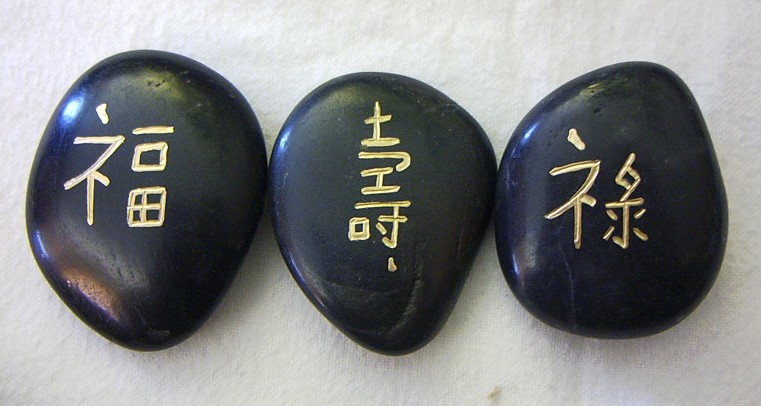
 Wu-De (Virtue)
Chinese Martial Arts place a strong emphasis on Wu-De (or Mo-Dak), or the concept of morality in martial arts. Martial skill, like any other weapon, bears responsibility for its use. Therefore, a student learns not only fighting techniques in the Kung-Fu school, but also principles for living an honorable and fulfilling life. In turn, these ideas help the practitioner not only as a person, but also provide a framework for physical and technical improvement as well.
Wing-Chun Moral Conduct
1. Jie Se Yu / Resolve Lust Desire: Zen Buddhism, the moral foundation of Shaolin martial arts, carries its way into Wing Chun. Desire and lust are all roadblocks towards self-improvement.
2. Jie Dou Zheng / Forbid Struggle War: The concept of Dou Zheng ("struggle") implies disharmony both within a school, and also the use of fighting techniques outside of the school. Inside the school, disharmony affects the learning environment and breaks down the concept of the extended martial art family. Troublemaking in public brings shame to the school and its teacher, and may ultimately lead to trouble for the student who causes mischief.
3. Qin Lian Xi / Work Train Practice: The idea of Qin includes the connotation of responsibility and duty. As with any endeavour, one must put in an effort to improve oneself.
4. Duo Yan Jiu / Often Research Study: As a personal and intuitive style, your Wing Chun skills can grow through experience and study. To be effective, you need to accommodate these skills to your ability and conditions.
5. Jing Shi Zhang / Respect Teacher Elders: Confucian thought serves as the framework for the martial arts school, defining the proper relationship between a student and a teacher, as well as between students. Without respect, a student cannot "empty his cup" to hold what the Sifu has to offer.
6. Ai Guo Jia / Love Country Family : In Chinese, Ai Guo means "patriotism," while Guo Jia refers to "nation." In the old days this phrase was used as a unifying slogan in a war against foreign powers or an unjust ruler. In the modern days, the meaning has changed to extending your love/respect to the broader human communities, starting with your martial art family.
7. Zhong Li Jie / Important Manner Ceremony: Good manners within the school reflect the moral character of your parents, while good manners outside of the school are a reflection of your Sifu's moral integrity.
8. Shou Xin Yi / Protect Faith Justice : One of the Eight Morals of General Chiang Kai-Shek, here Xin Yi refers to justice and the rule of law.

